 |
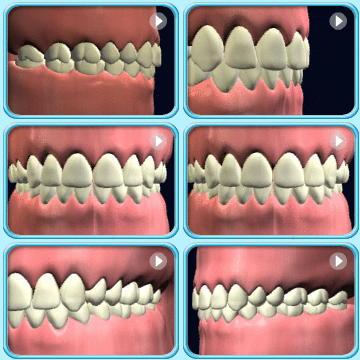
The occlusion is determined by the positions of upper and lower jaws. In a normal occlusion, the lower front teeth should contact the inner surface of upper front teeth. One-third of the outer surface of lower front teeth should be covered by upper front teeth. The outer surface of lower front teeth should be at a distance of 2 to 4 mm from the inner surface of upper front teeth. |
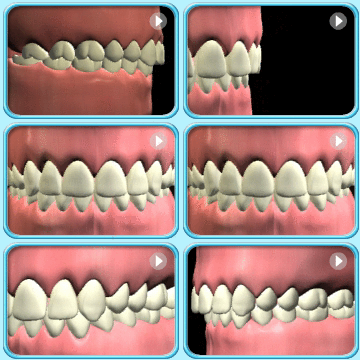 |
If the upper jaw bone is proportionally larger that the lower jaw bone, or the upper front teeth are positioned more forward than the lower front teeth, it will result in ‘protrusion of upper front teeth’. |
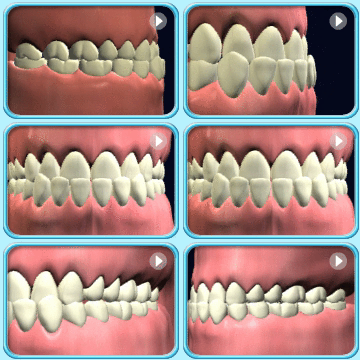 |
On the contrary, if the lower jaw bone is larger than the upper jaw bone, or the lower front teeth are positioned more forward than the upper front teeth, it will result in a ‘reverse bite’. |

