
 Oral Problems
Oral Problems
Oral ProblemsMismatch in the sizes of upper and lower jaws
"Projected upper teeth" may be resulted if the upper jaw is much longer than the lower jaw. "Reversed bite" may be resulted if the upper jaw is smaller than the lower jaw.
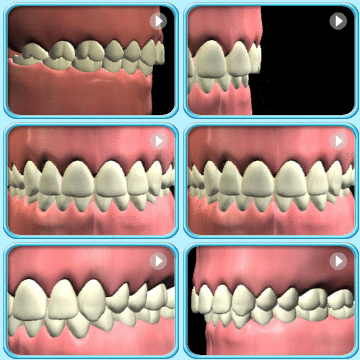 Projected Teeth
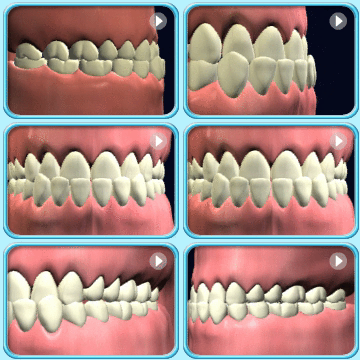 Reversed Bite
Mismatching in the tooth and jaw sizes
If the tooth size is too big, or the jaw size is too small, the jaw may not have enough space for all the teeth to align, leading to crowding of teeth. On the contrary, if the tooth size is too small, or the jaw size is too large, there will be spaces between the teeth and the teeth alignment will look unesthetic.
Abnormal number of teeth
Normally one should have 28 permanent teeth (excluding the third molars). If the number of teeth is more than that, the jaw may not have enough space for all the teeth to align properly. If there are too few teeth, there may be spaces between the teeth and the teeth alignment may look unesthetic.
Early loss of deciduous teeth
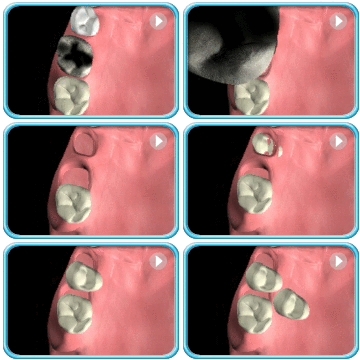
"If a deciduous tooth is lost prematurely, the adjacent teeth will migrate towards the space of the lost tooth, occupying the space. The small gap prevents the succeeding permanent tooth from erupting into good position.
Bad habits
Bad habits such as digit sucking and biting on a pen can induce pressure on the teeth and push them into an abnormal position.
Tooth decay
Severe tooth decay in the adjacent tooth surface will cause the neighbouring tooth to tip over and take up the space, and the teeth will become irregular.
Gum disease
Severe gum disease will result in the loss of bone support to the teeth. The teeth will then drift to abnormal positions.
Loss of teeth
Loss of teeth due to other oral diseases or traumatic injury can cause drifting of adjacent teeth.