
 Oral Health Care
 during Pregnancy
Oral Health Care The foetus does not absorb calcium from the mother's teeth. The calcium of the foetus comes mainly from the mother's normal diet and to a lesser extent, from her bones. Hence, her teeth could not be weakened because of her foetus. However her teeth may be weakened because most expectant mothers fall into a habit of frequent snacking in between meals and this habit may cause tooth decay.
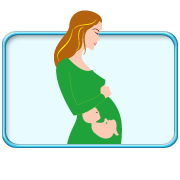
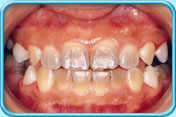
From the 5th to 6th week of pregnancy, teeth begin to develop in the foetus. If the expectant mother takes tetracycline during pregnancy, the teeth of the foetus may be affected and become discoloured. Hence she has to tell the doctor that she is pregnant, so that the doctor will take care in prescribing the appropriate medication if necessary.
In case the expectant mother suffers from painful wisdom tooth, she should consult dentists immediately. The first three months of pregnancy is an important development stage for the foetus. To avoid possible risks caused by dental treatment, dentists usually suggest to put off dental treatments until the 4th to 6th month of pregnancy, and the non-urgent dental treatments can be done after the baby is born.
It is not advisable for expectant mothers to receive dental treatment after the 7th month of pregnancy. Because the supine (laying) position of a dental chair will not only cause discomfort to expectant mothers, it is even possible that the major veins from the lower limbs can be pressed by the weights of the uterus and the foetus, which will block the blood from returning to the heart.
Due to the above reasons, expectant mothers should have wisdom tooth extraction after the baby is born. If the expectant mother must have her wisdom tooth removed because of urgent oral problems, dentist will first assess the risks of the treatment in advance. Otherwise, expectant mothers may have her wisdom tooth extracted under local anaesthesia during the forth to sixth month of pregnancy.
In general, the anaesthesia used during tooth extraction does not have adverse effect. Although local anaesthetics can enter the placenta, the amount of anaesthetics needed for most of the dental procedures is safe for pregnant women because the placenta can filter out most anaesthetics.
In fact, if good disinfecting and preventive measures are carried out, oral treatments are safe for expectant mothers. Should expectant mothers feel worried or uncomfortable towards having dental treatments, the dentist may apply temporary dressings or perform other simpler urgent treatments to stabilize the situation, and treat the problem tooth comprehensively after the baby is born.
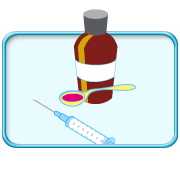
In case the expectant mother is experiencing a fever and pain caused by wisdom tooth infection (Pericoronitis), she should consult dentist immediately. The following treatments may help:

According to research results, some antibiotics are suitable for pregnant women. They include Penicillin, Amoxicillin, Clindamycin, etc. Pain killers such as Paracetamol could also be used. Medication used by expectant mothers must be prescribed by registered doctors or dentists. Do not purchase over-the-counter drugs from pharmacies. You may consult your doctor or dentist for further details.
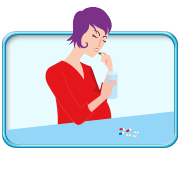
The post-extraction wound care for expectant mothers is the same as other people. Dentist will dress the wound appropriately to avoid further bleeding. Expectant mothers should pay attention to the followings on the day of the extraction:
Time needed for wound healing varies according to different situations. Expectant mothers should consult the dentist if they have any queries.