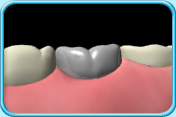
Amalgam has been
used as a dental filling material for more than 150
years.
Composition: An alloy of mainly silver, tin, copper and mercury
Properties:
Hard and durable; high wear resistance
Easy to use
Safe
Amalgam safety:
The followings are some queries about amalgam:
Mercury, which is poisonous, is used in dental amalgam. Is amalgam filling safe? Amalgam contains various metals such as silver, copper and tin, as well as mercury. When mercury is combined with these metals, it becomes an inactive stable substance. Only under unusually great pressure or abrasion will the amalgam release a minute amount of mercury vapour. As compared to the daily dosage of mercury being absorbed from the environment, such as food, water and air, the minuscule amount of mercury released from the amalgam fillings is insignificant.
Should people have the amalgam fillings in their mouths removed in order to prevent certain serious illnesses such as Alzheimer's disease?
There is no scientific literature or evidence which shows that the removal of amalgam fillings helps patients recover from their illnesses, nor is there any evidence which suggests such a relationship. Unless there is an allergic reaction, it is not advisable to have amalgam fillings replaced because of the following reasons:
Replacement of filling materials will lead to further loss of tooth structure.
Amalgam is still the most preferred filling material owing to its safety and effectiveness. Tooth-coloured filling material such as composite is not as resistant to stress as amalgam and is not suitable for large cavities. Gold is an effective material, but it is expensive.
Are some people allergic to amalgam? Allergic reaction to amalgam is very rare. Within 150 years of usage, there were only 100 documented cases. This type of patients should use other filling materials.
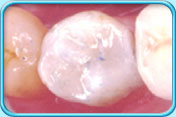
Disadvantag: The greyish-silver colour of amalgam is not aesthetically appealing.
Application: It's mainly used for restoring back teeth where stress load is high.
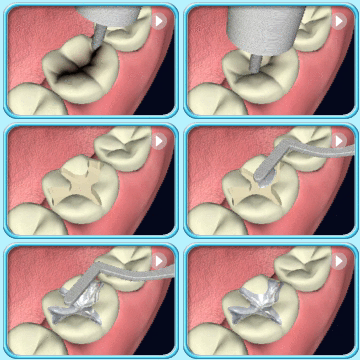
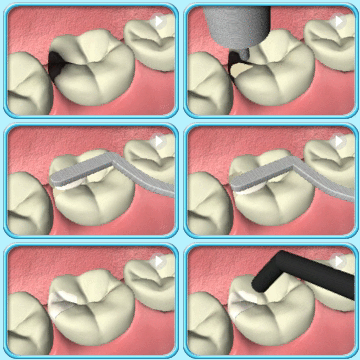
Procedures for amalgam filling:
First remove decayed tooth substances
Amalgam is placed into the tooth cavity
The filling is shaped, excessive material is trimmed off and the filling is polished
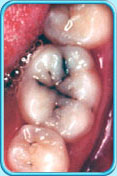
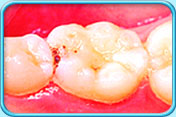
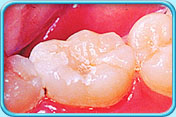
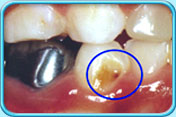
Before filling
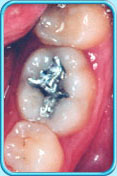
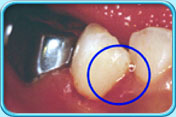
After filling
Composite
It has been in use for over 40 years and has been undergoing improvement in the past 10 years.
Composition:
A substance made up of acrylic resin filled with inorganic
substances such as glass, quartz as additives to enhance
the strength
Properties: Aesthetic; colour is similar to natural tooth,
but will be stained by food colour after having been
in use for a period of time Disadvantage:
Not as hard as amalgam
Application:
To restore decayed teeth
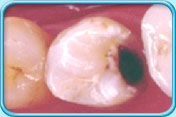
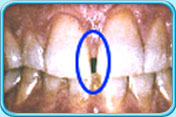
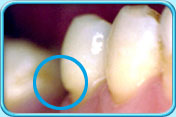
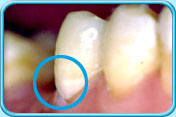
Before filling
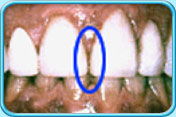
After filling
To restore the aesthetics of the teeth, such as to modify the shape, size and colour of the teeth
Before filling
After filling
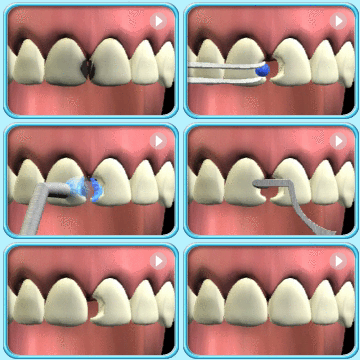
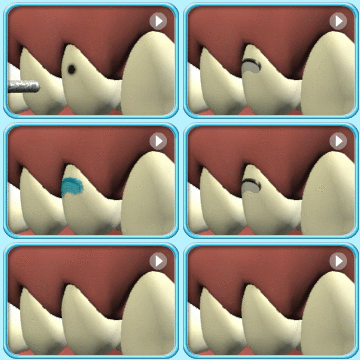
Procedures for composite filling:
Decayed or weakened portion of the tooth is removed
Tooth surface is etched with diluted acid (for example, 30% phosphoric acid)
Tooth adhesive is applied on the prepared tooth
Composite is placed onto the prepared tooth and the restoration is shaped
Filling is hardened by using a light curing instrument
Excessive material is trimmed off and the restoration is polished
Glass Ionomer Cement
It has been in use for over 20 years and has been improved in recent years.
Composite:
A substance is made up of aluminosilicate glass
powder and a liquid polyacrylic acid
Properties:
Aesthetic; colour is similar to natural tooth, but lack of translucency
Bonds to the tooth
Fluoride releasing — prevents recurrent Dental Caries around the filling material
Disadvantage:
Inadequate strength, low wear resistance, not
durable
Application:
To restore abraded teeth
Before filling
After filling
Because
it is not durable, it serves as a transitional filling
for deciduous teeth
Before filling
After filling
Procedures for Glass Ionomer Cement filling:
Decay is removed
Glass
ionomer cement is placed onto the prepared tooth and
the restoration is shaped
Filling
is hardened by a light curing instrument
Excessive material is trimmed off and the restoration is polished
Compomer
A
newly developed material in recent years
Composition: It is a mixture of composite and glass ionomer cement.
Properties:
It possesses the properties of both composite and glass ionomer cement
Improved aesthetics and better wear resistance than glass ionomer cement but not as good as composite
Easy manipulation — as easy as glass ionomer cement but not as critical as composite
Application:
Used
as transitional filling for deciduous dentition
Before filling
After filling
Procedures for Compomer filling
Decay is removed
Tooth adhesive is placed on the prepared tooth
Compomer is placed onto the prepared tooth and the restoration is shaped
Filling is hardened by using a light curing instrument
Excessive material is trimmed off and the restoration is polished
Stainless Steel Crown
Silver
in colour, fixed sizes, and usually used for molars
of deciduous teeth