Tooth Club Knowing your teeth Tooth transition Oral Care Tips Common oral diseases Traumatic injury to teeth and oral structure Oral treatments
Home
Dental knowledge
Common oral diseases Common oral diseases Common oral diseases
Common oral diseases
How does dental caries (tooth decay) look like?
Why is there dental caries?
Process of Dental Caries
What are the consequences of dental caries?
Ways to keep Dental Caries away
Common oral diseases
Parents of children aged 6 or below
Children aged 7 or above
Stories
Games
Activities Download
 
en_pnc_2_2_1_1_19.jpg
 
 
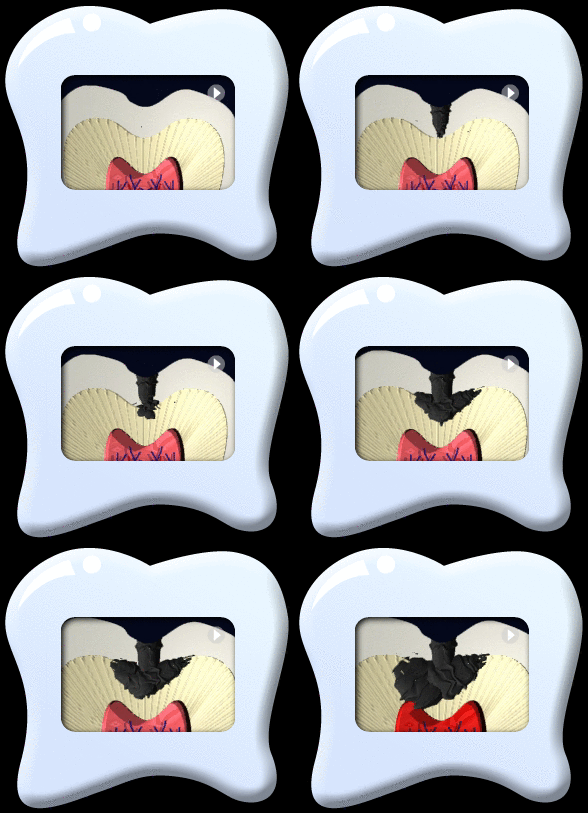
Process of Dental Caries


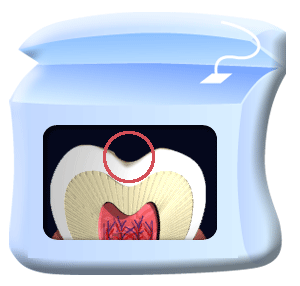
Early dental caries:
The cavity will start from enamel. At this stage, you will not feel any pain; therefore it is difficult to notice caries. If you have regular dental check-up, the dentist can detect the caries and treat it at an early stage.
OD_3D_07_p.gif
 
Caries spreads into the dentine:
Pain will be felt when eating cold, hot, sour, and sweet food. Cavity may also be found.
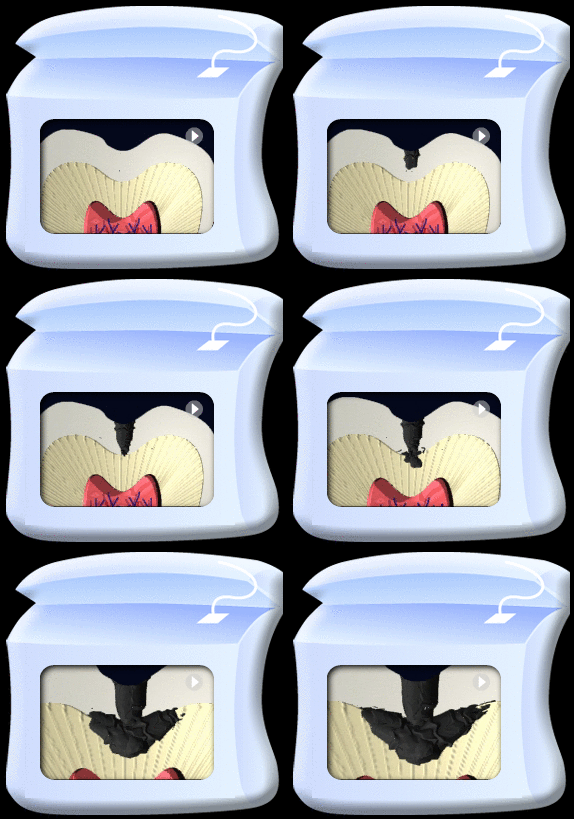
 
Caries extends into the pulp:
Severe pain will be felt that may affect sleep at night. An obvious cavity may appear on tooth. Pulp may also be infected by bacteria and the tooth becomes necrotic, which can even result in an abscess.


What can we do?
Go to a dentist immediately to receive the following treatments:
At an early stage of dental caries without obvious cavitations, the dentist will apply topical fluoride to repair the early caries, or give other preventive treatments according to need.
Restore the tooth by a filling when the carious lesion is still small, and the tooth is still restorable.
Restore the tooth by a crown when the carious lesion is relatively big, and the remaining tooth structure is weak.
Carry out pulp treatment (root canal treatment) when the caries have extended into the pulp.
Extraction is needed if pulp treatment is not appropriated.


  bottom.jpg
TEXT ONLY 繁體純文字< 簡体純文字< 繁體 簡体 Quick Search Site Map Contact Us